A NOTE FROM CHRIS:
I've come to believe that getting a room's bass response right is probably one of THE most difficult things to conquer in room setup. Below 150 Hz or so the room has the final say: peaks that boom, nulls that disappear, and notes that hang in the air long after they should have stopped.
Passive bass traps work great, but they are very large, and not exactly cosmetically pleasing.
The AVAA C214 works like a 'virtual black hole' for bass trapping, with a very small footprint. For those of us who've already maxxed out with passive bass traps, or those who'd prefer to be on the other side of their spouse declaring 'fugly!' for their acoustic tuning needs, this product is about as close to a magic bullet as I've seen.
— Chris VenHaus, VH Audio
YOUR ROOM PLAYS THE BASS, TOO
You know the symptoms: Room Boom. Bass notes that oddly jump out of the mix. Other bass notes you know should be there… are A.W.O.L. Shift your listening position or speakers and the bass doubles… or disappears.
None of that is on the recording. And no amount of tube rolling or DAC swapping will bail you out, because the problem isn't in the signal chain.
It's your room.
WHAT'S REALLY GOING ON
Bass soundwaves are big: roughly 7.5 feet long at 150 Hz, and over 50 feet at 20 Hz. In a typical listening room they'll bounce wall to wall and floor to ceiling, piling up on themselves at frequencies set by the room's dimensions. Acousticians call these room modes, and they hit you twice.
First, the level. Depending on the note and where you sit, bass gets pumped up in one spot and nearly cancelled in another. The 'sweet spot' for imaging is rarely the sweet spot for bass.
Second (and this is the sneaky one): ringing. A room mode is a resonance, like a struck bell. It stores energy and keeps sounding after the note has stopped… often several times longer than everything else in the room. Notes smear into each other. Nearby notes all ring out at the mode's pitch, and our brain lumps them together as 'same'. That's the classic 'one-note bass.' To muddy the waters even more, the materials your room is made of – the walls, the floor – all add wildcards into the mix as well… just enough to throw your 'room mode calculator' off balance, too.
The damage doesn't stay down in the bass, either. That lingering energy masks what sits above it: low-level detail, recorded ambience, depth, the quiet space between notes. Sonic texture that requires fast note decay can get buried below the 'ring' or smeared with it. The whole presentation can turn to sludge that reaches into the midrange. The higher harmonics were never the problem, and the C214 doesn't touch them. But once lingering bass energy stops masking them, you hear them differently: the harmonic detail that was there all along is brought back into balance.
WHY EQ ISN'T A MAGIC BULLET
EQ changes the signal going into the room. It doesn't change the room.
Back to the 'bell ringing' example. EQ turns down how hard you strike it, which can help at the one seat you measured. But it's still the same bell, ringing at the same rate. Dial in a correction for your chair, and the seat next to it can get worse. And the dips? You can't boost your way out of a cancellation; whatever you boost, you're also boosting the reflection that cancels it. You just make your woofers work harder for nothing.
To stop a bell from ringing, you put a hand on it. For you fellow drummers out there, it's like a non-damped drum that gives you crazy overtones, vs. just enough damping that helps you produce a more pure tone with just the right amount of 'character'.
THE AVAA C214: A 'BLACK HOLE' FOR BASS RINGING
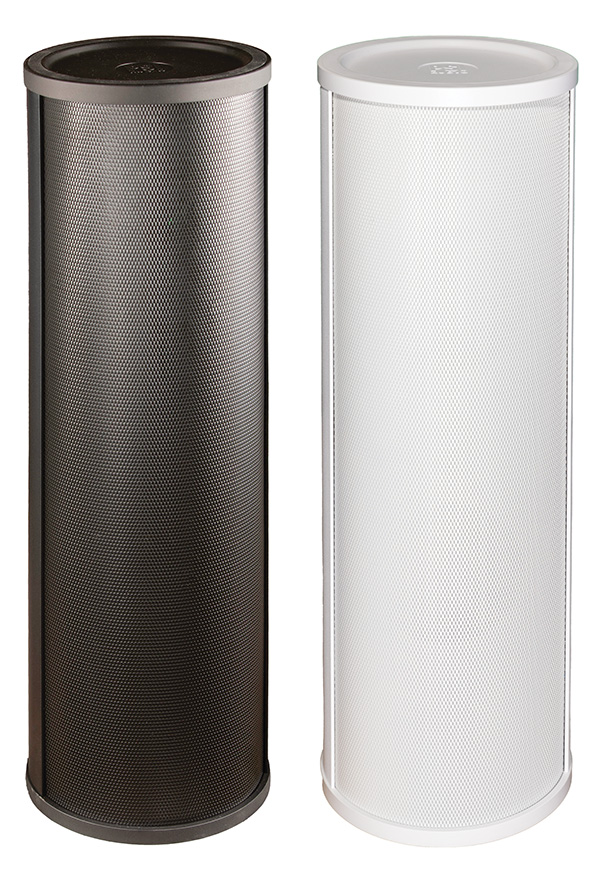
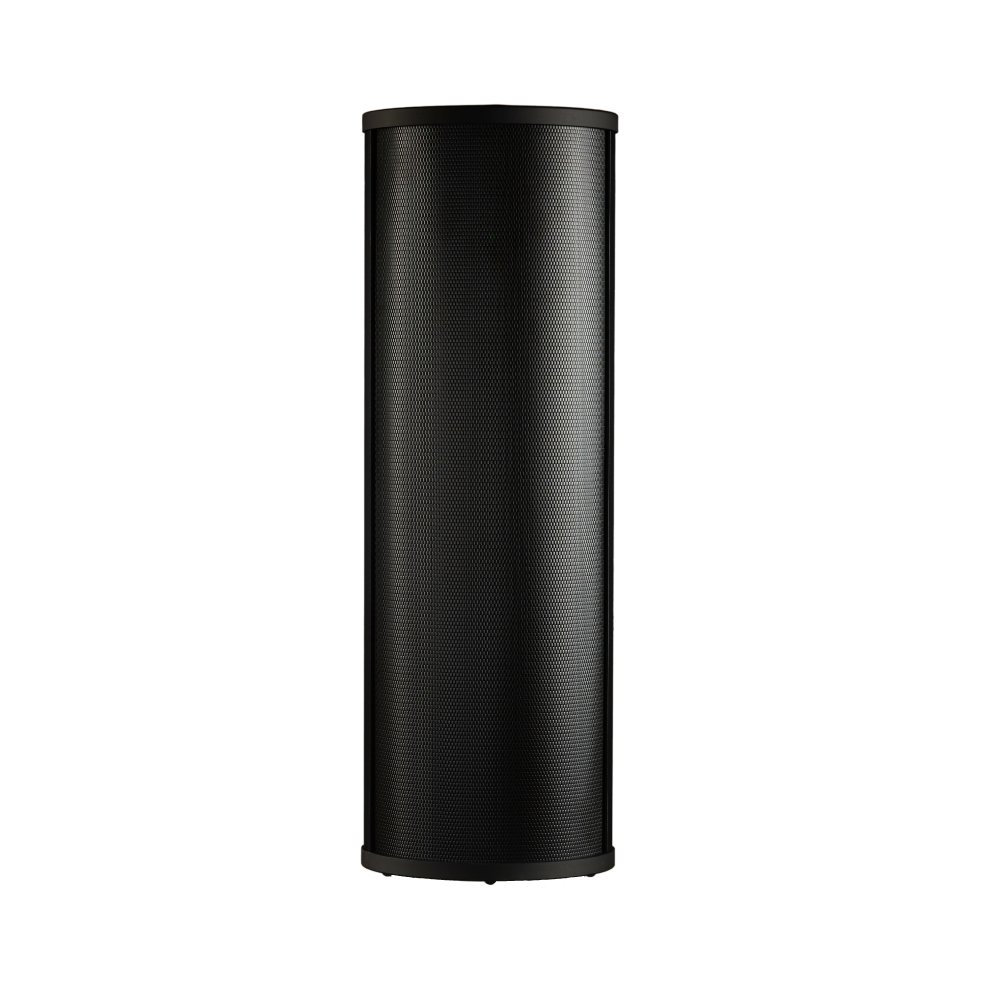
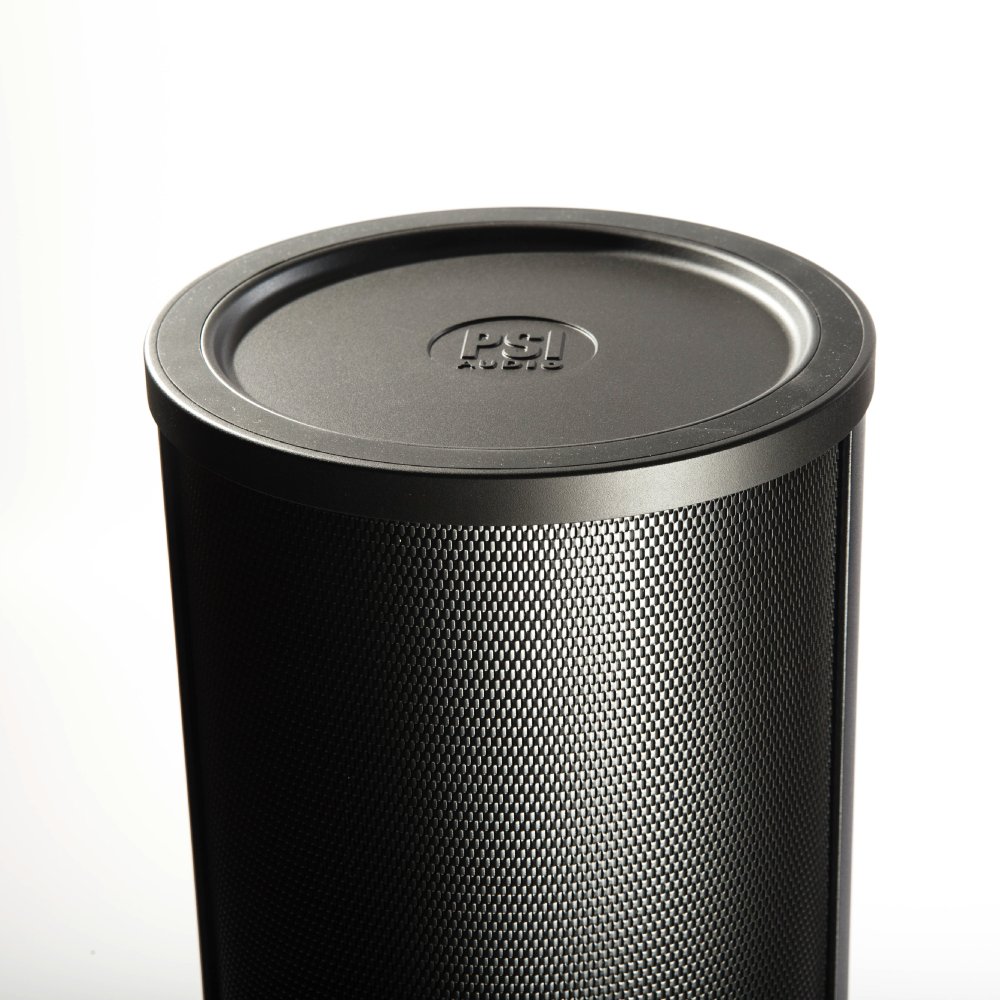
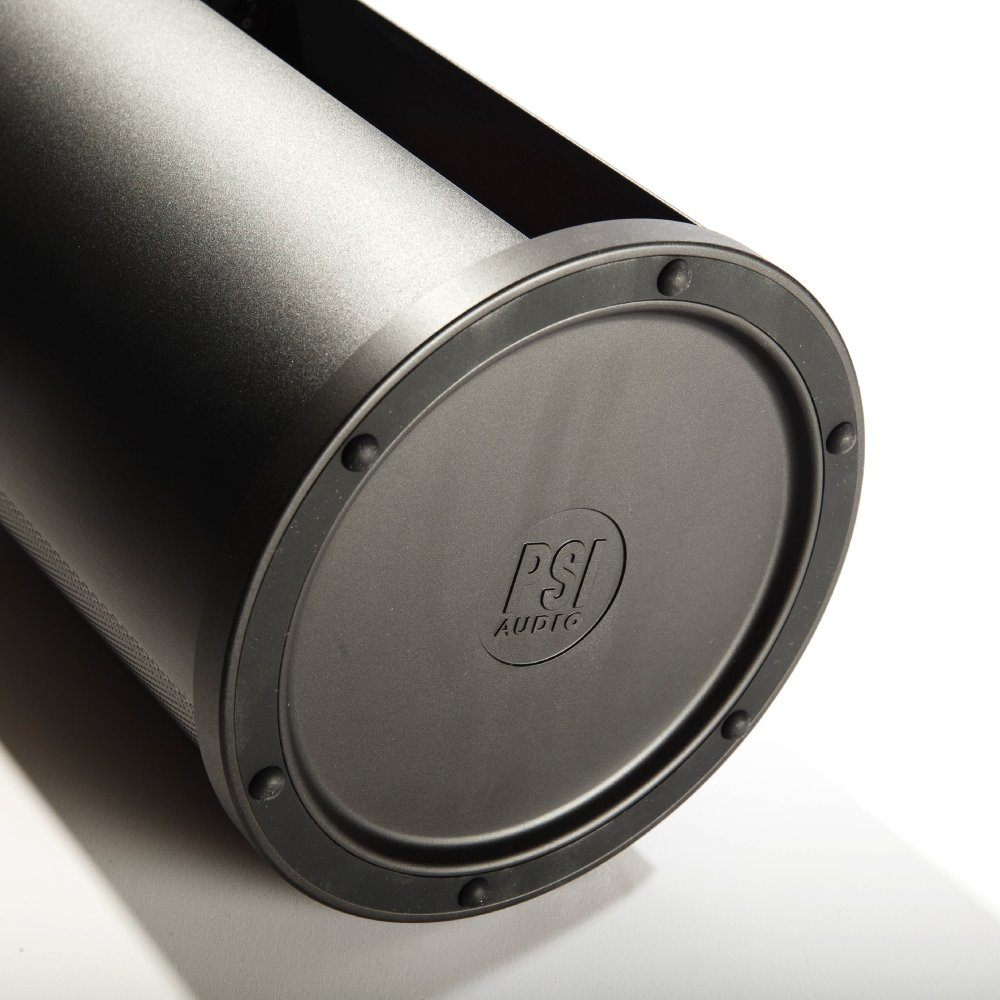
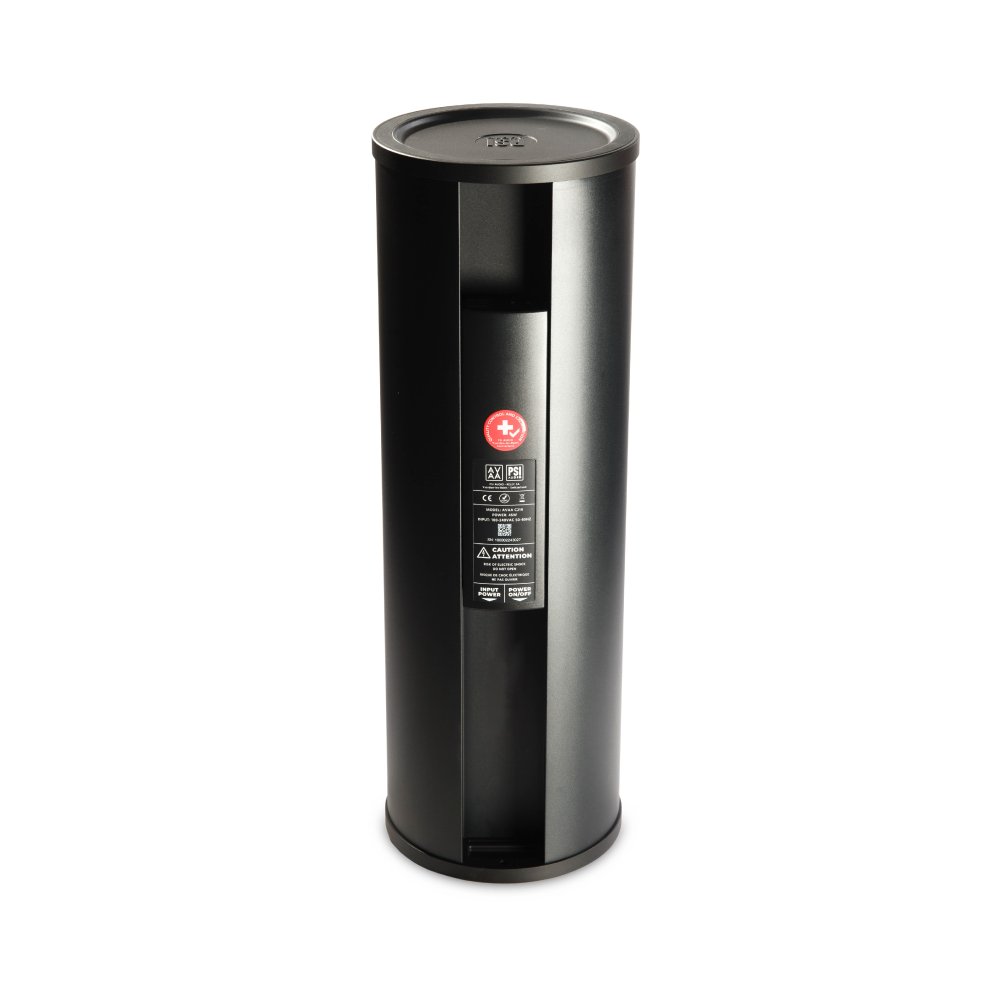
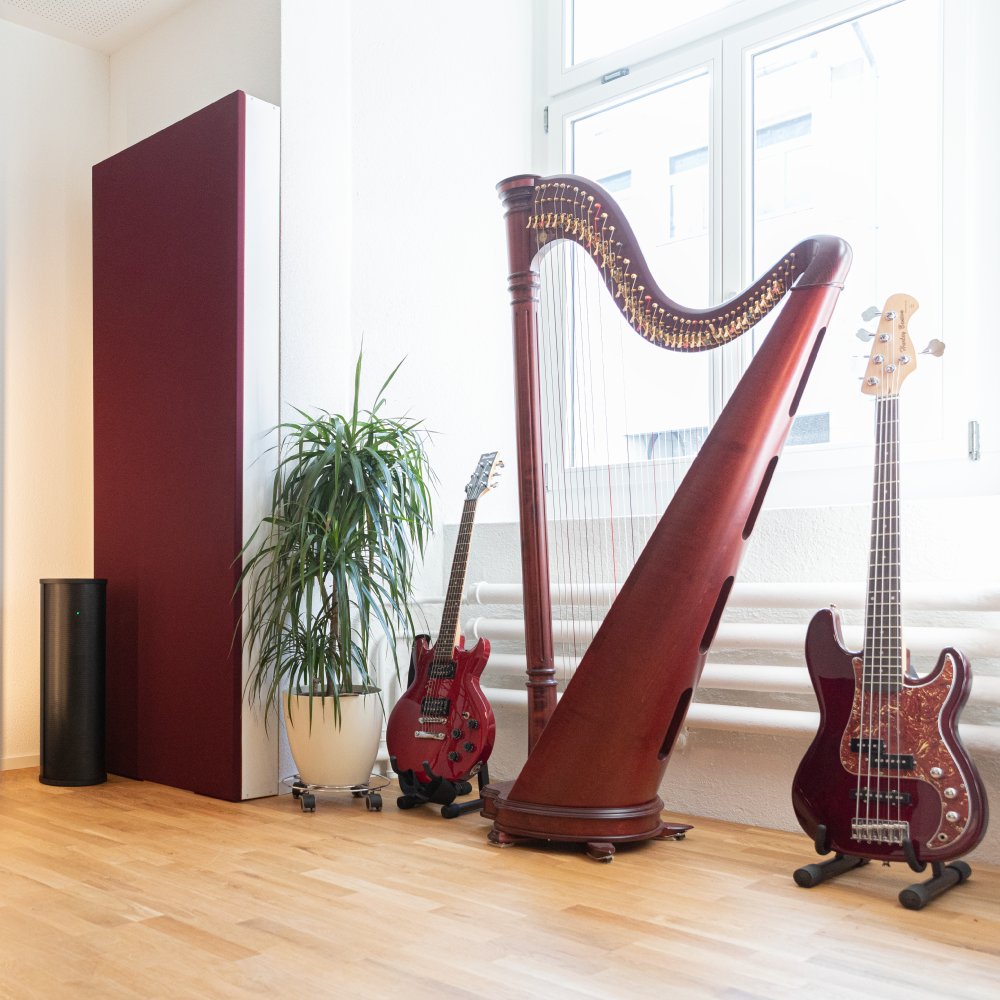
PSI Audio's AVAA C214 (Active Velocity Acoustic Absorber) is a Swiss-built cylinder about two feet long that is positioned to swallow the bass that loiters too long.
While it might sound like some sort of black magic juju, there is solid science behind how it works. Inside, a microphone senses bass pressure, and DSP drives a pair of 5.5-inch drivers in step with it. When a bass wave pushes, the drivers step back. When it pulls, they step forward. To a ringing room mode, that position acts like a black hole: energy goes in… and doesn't come back out. The C214 can reach from 15 to 160 Hz, with no tuning or calibration. And because the energy is actually removed, the 'stacked' modal ringing is affected everywhere in the room, not just at your seat.
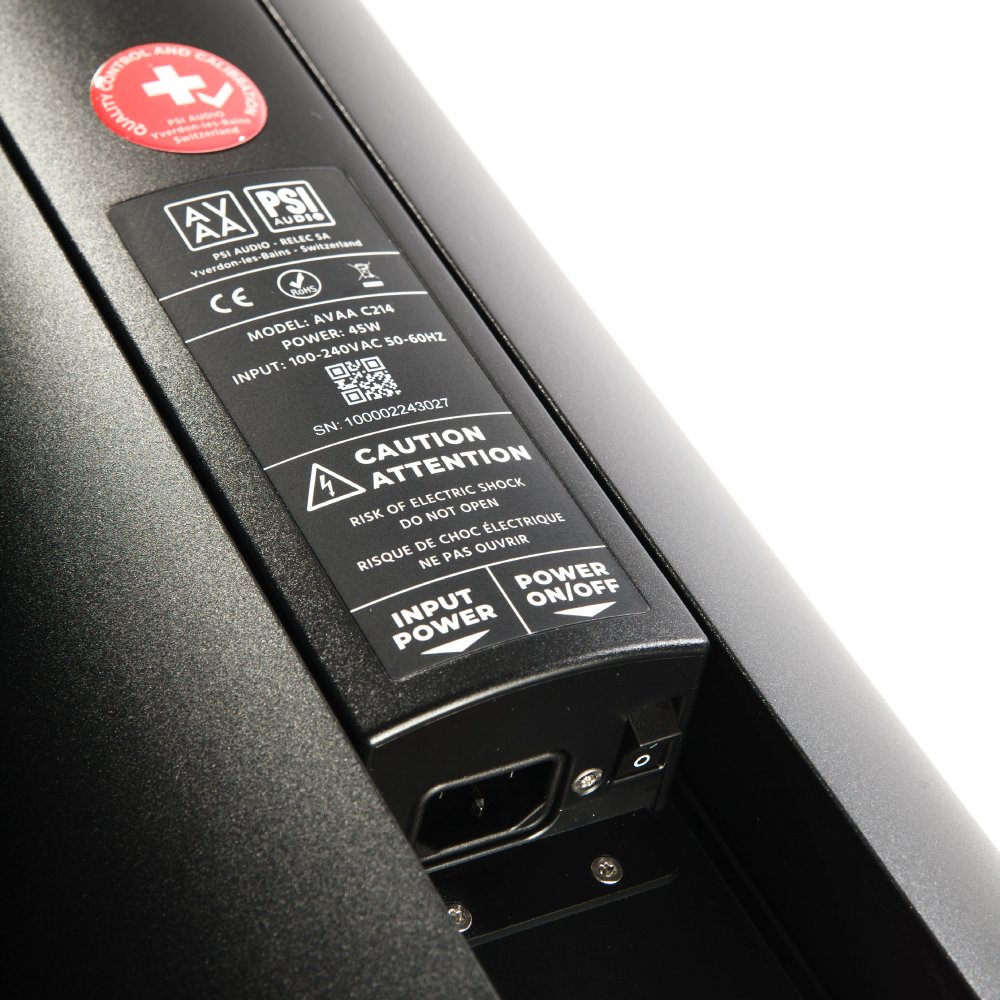
The C214 doesn't sit in the signal path, doesn't connect to your system, and doesn't play anything back into the room. You simply plug it in, flip the switch… and done.
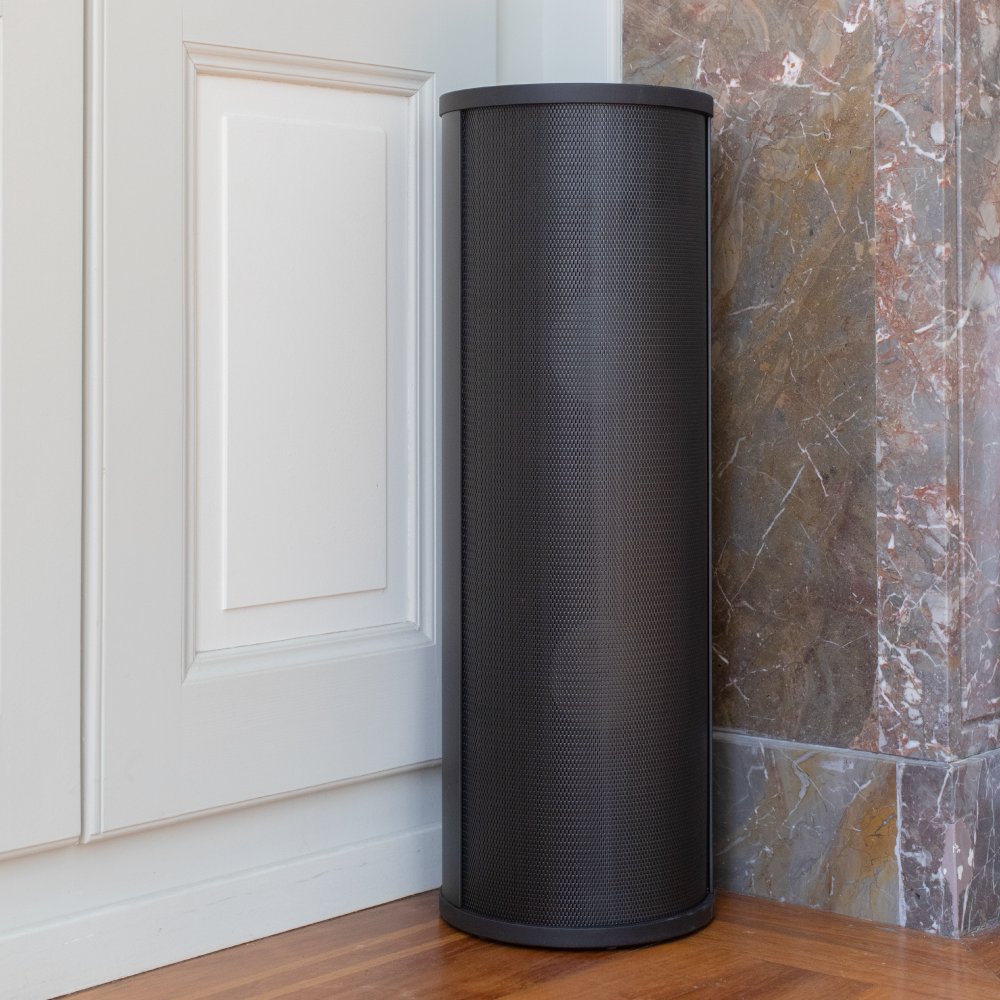
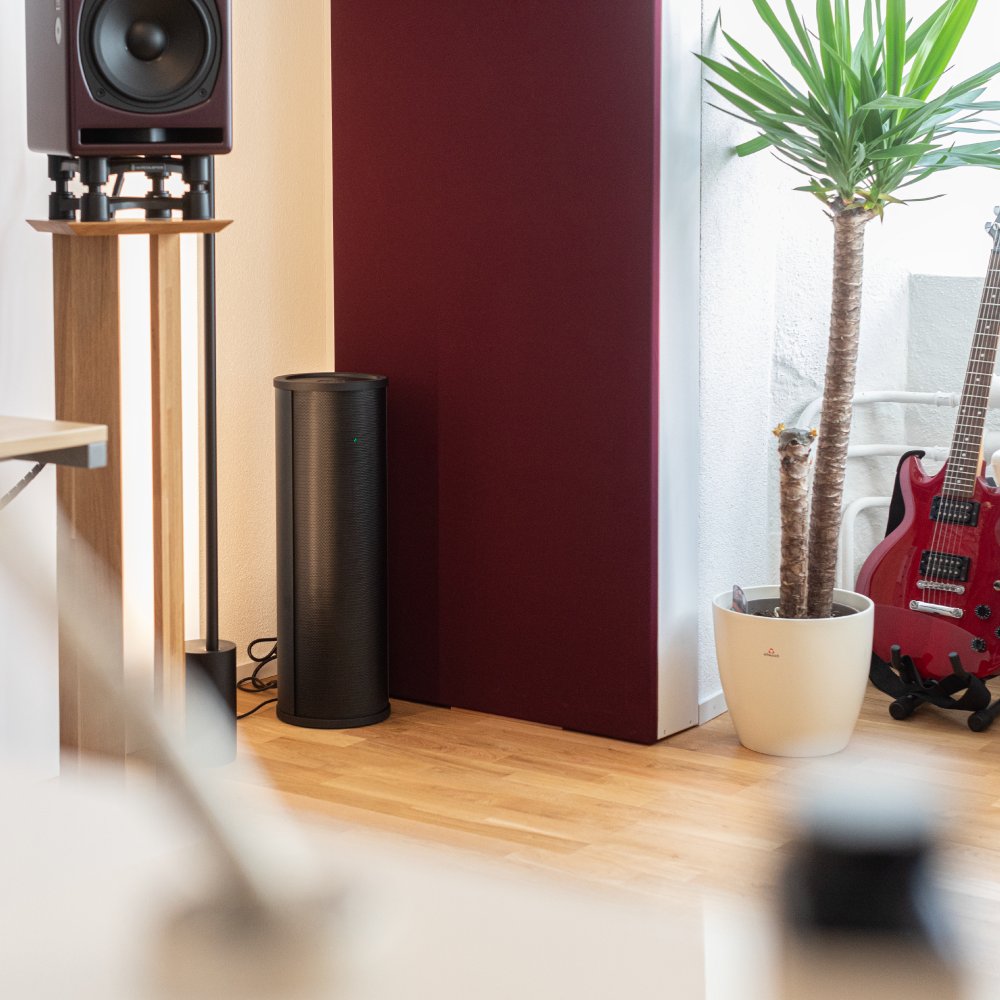
Placement matters, but it isn't fussy. Start in the corners behind your speakers, pushed right into the corner. From there, a little trial and error pays off: play the bass note that booms, walk the room, and the spot where it's loudest is where the C214 wants to be. If you're the REW type, a before/after waterfall will show you exactly what each position is doing. Just like the best practice of using multiple subwoofers, experience shows most rooms will perform best with a pair of AVAA C214s.
WHAT CHANGES
Bass that starts and stops with the music. Low notes with pure tone, all the way into the bottom octave. One of my favorites: think of the percussive-like flutter in the lower register of a bowed cello. Because lingering bass is no longer masking everything above it, the soundstage widens, instruments lock into place, and more of the natural recording venue comes through.
WHERE IT FITS
Low bass is the hardest thing in a room to tame passively. Porous absorbers need to be huge to be effective: a quarter-wavelength deep to work well (7 feet at 40 Hz!). Membrane and diaphragmatic traps get around this by resonating with the bass, but they are tuned to cover a narrower band and still need serious size to reach the bottom octave. Either way, passive treatments run out of reach (and room) in that bottom octave.
That's why the C214 doesn't compete with your bass traps… it complements them.
Tame the ringing, and the music will be heard for what it is.
PHOTOS (click to enlarge):
PLACEMENT NOTES FROM THE REVIEWS:
- Darko.Audio's reviewer placed his units deep in the front corners, about 2 cm (under an inch) from the walls.
- For rooms of roughly 215–860 sq ft (20–80 m²), two units are recommended for symmetry (as reported by audioXpress).
- Sound On Sound measured progressively better mode suppression going from two to three to four units, with one unit in each corner working best.
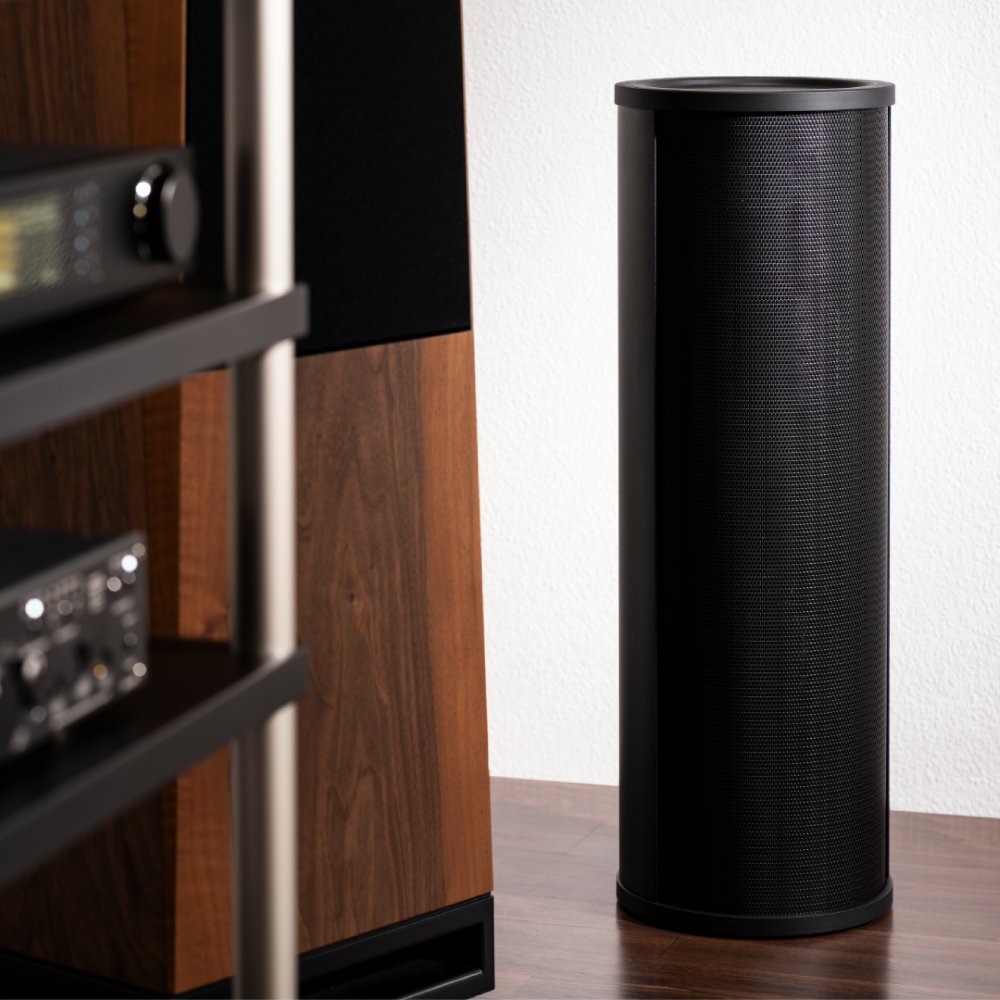
- Because it doesn't need line of sight, it can sit behind furniture or beside a floor lamp (The Absolute Sound).
WHAT THE MEASUREMENTS SHOW:
- The Absolute Sound (two units): bass peaks reduced by 4–6 dB and modal decay time cut by 75–100 ms.
- Sound On Sound (four units, one per corner): about 6 dB of suppression of a 67 Hz room mode.
- PSI Audio case study (two units in a studio): decay time at 32 Hz reduced by 300 ms.
- Acoustics Insider (10 studios): modal decay reduced by about 0.5 second on average at the main room modes, and by 0.84 second at 36 Hz in one room with two units. Peak reductions were typically 1–5 dB. Two units always outperformed one, and the biggest gains were below 50 Hz.
- Stereophile (two units, front corners): decay spectrograms showed the room's high-magnitude, long-decay peaks reduced significantly, with the direct sound relatively unaffected.
WHAT THE REVIEWERS SAY:
"The difference was always an improvement." — Tom Martin, The Absolute Sound
"These really work! Space expanded in all dimensions." — Kalman Rubinson, Stereophile
"A technologically advanced, easy to use and brilliantly effective product that provides a neat solution to a genuine need." — Phil Ward, Sound On Sound
SPECIFICATIONS:
- Type: Digital active bass trap (Active Velocity Acoustic Absorber)
- Effective range: 15–160 Hz
- Equivalent absorption: up to 45x its physical size (per PSI Audio)
- Drivers: two high-excursion drivers
- Processing: two independent low-latency DSPs, self-adapting; no calibration required
- Connection to audio system: none (no signal input)
- Power: IEC mains inlet with power switch; about 3–4 VA in normal use (measured by audioXpress)
- Enclosure: aluminum
- Colors: Black or White
- Dimensions: Ø210 x 640 mm (approx. 8.3" diameter x 25.2" tall)
- Weight: 11 kg (approx. 24 lbs)
- Shipping: boxed approx. 14" x 14" x 36", 30 lbs
- Control: adjustable level on the unit; PSI's AVAA Remote app (announced) adds level adjustment and grouping of multiple units
- Mounting: free-standing; optional PSI mounting feet for wall, ceiling, or floor installation
- Warranty: 5 years (+1 year), per PSI Audio
VIDEOS:
PSI Audio introduces the AVAA C214, the first digital active bass trap
PSI Audio – the AVAA C214 in action: real room measurements
PSI Audio – Understand the AVAA C214
The Absolute Sound – PSI Audio AVAA C214 Active Bass Traps Review
More AVAA C214 videos on YouTube:
MORE READING:
|